Intelligent Welding Robots Accelerate Manufacturing Automation and Smart Factory Development

As global manufacturing continues its transition toward digitalization and intelligent production, industrial robots are becoming a critical component of modern factories. Among these technologies, are gaining increasing attention due to their ability to deliver high precision, consistent quality, and continuous production performance.
Industry research indicates that the global robotic welding market continues to expand as manufacturers seek automation solutions to improve productivity, reduce operational risks, and maintain consistent welding quality.

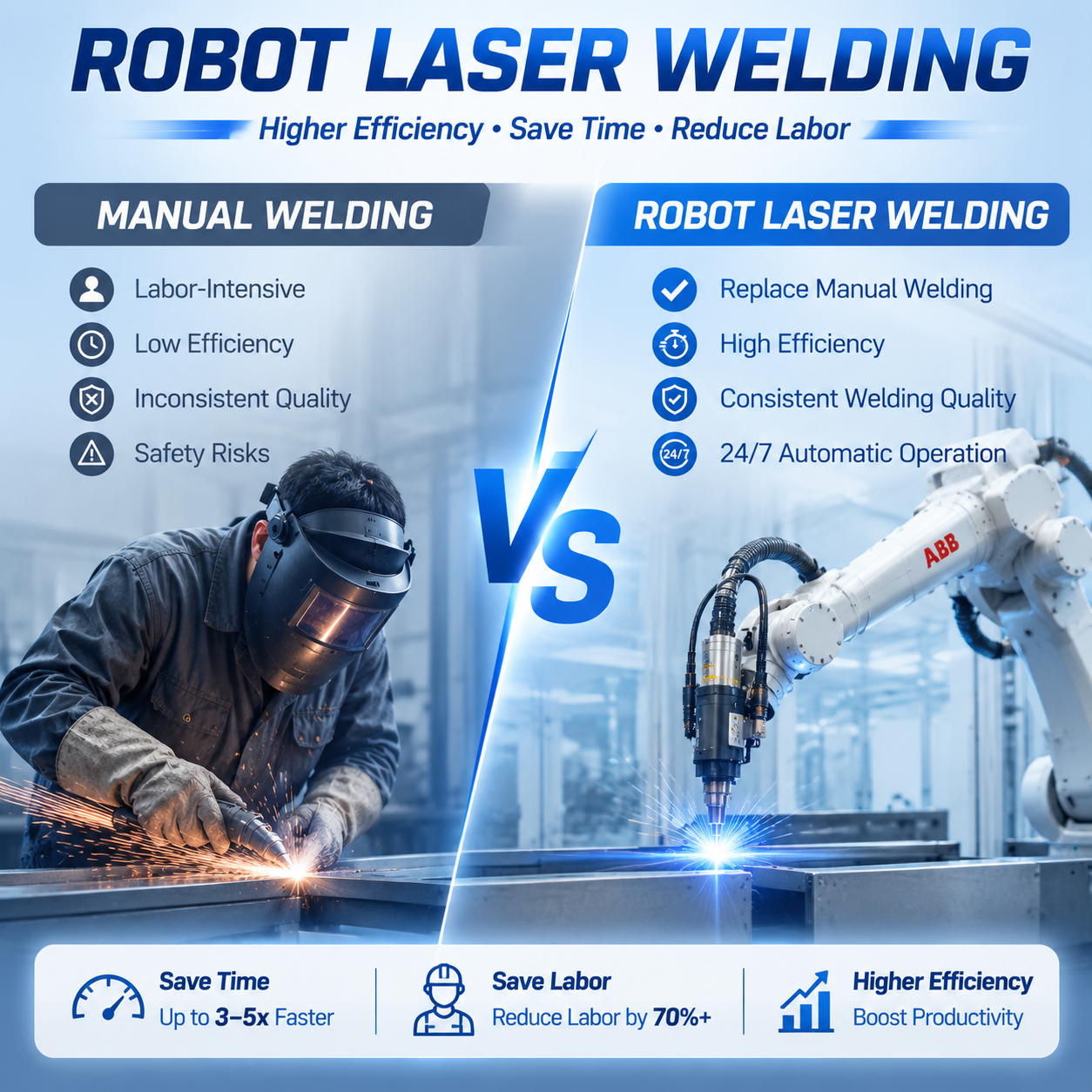
Traditional manual welding processes often depend heavily on operator skills and working conditions. Intelligent welding robots provide a more stable alternative by combining robotic motion control, automation software, and advanced sensing technologies.
Modern robotic welding systems offer advantages including:
High positioning accuracy
Stable welding performance
Automated production control
Flexible manufacturing capability
Integration with smart factory systems
These features make welding robots an important solution for Industry 4.0 manufacturing environments.
Artificial intelligence and machine vision technologies are accelerating innovation in robotic welding.
Manufacturers worldwide are exploring AI-based solutions for weld seam recognition, automated path planning, and real-time welding parameter optimization. Recent industrial
applications, including AI-assisted robotic welding in shipbuilding, demonstrate how intelligent automation can improve productivity and workplace safety.
Future welding robots will evolve beyond repetitive automation tasks and become intelligent manufacturing units capable of self-adjustment, data analysis, and process optimization.
Intelligent welding robots are becoming a major driving force behind manufacturing automation. By combining robotics, AI technology, and digital manufacturing systems, robotic welding
solutions enable companies to achieve higher efficiency, improved quality, and smarter production processes.
As the global manufacturing industry continues to evolve, welding robots will play an increasingly important role in the development of future smart factories.

smart factory solution